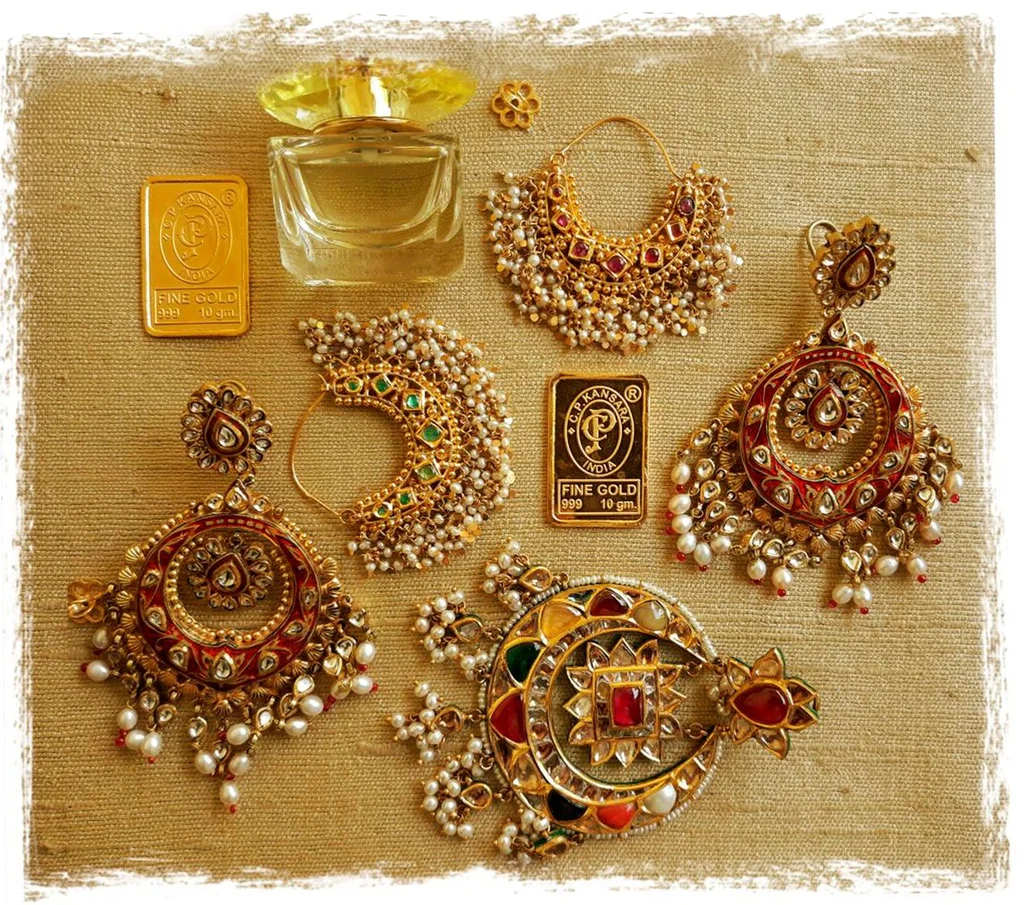

A single piece of Indian jewelry can pass through many hands before it reaches the wearer. One person shapes the metal. Another sets the stones. A third adds color or polish. Traditional Indian jewelry craftsmanship is a team effort that has been refined over centuries. This article looks at two ends of that range: gem-set ornaments worn on the neck and ears, and the foot jewelry worn near the ground.
Indian Gemstone Jewelry Techniques
Indian gemstone jewelry techniques differ from many Western methods. Instead of prongs that grip a stone, Indian makers often build a thin wall of gold around it. The stone sits snug inside, and the surface looks smooth and glowing.
The best-known family of methods is jadau. In jadau work, stones are set into gold with the help of lac, a natural resin. Within that family, Kundan jewelry stands out for its use of pure gold foil, which is pressed around each stone to hold it in place.
The process asks for a calm, steady hand. The foil is soft and thin, and one slip can tear it. Setters train for years before they handle expensive stones.
Traditional Kundan Designs
Traditional Kundan designs lean on nature and royal art. Flowers, vines, peacocks, and paisley shapes appear again and again. Many come from palace walls, temple carvings, and old textiles.
Rajasthan is closely tied to these designs, especially the city of Jaipur. Workshops there have made Kundan pieces for royal families for generations. Large necklaces, called rani haar, sit across the chest in layers of gold, stones, and pearls.
The back of a Kundan piece often carries enamel in bright colors. This is called meenakari. It adds a hidden layer of detail that only the wearer sees. Many people consider this a mark of care.
Indian Jewelry Materials
Indian jewelry materials range from precious metals to simple natural items. Gold is the main metal for wedding and festival pieces. Silver is common for everyday wear and for foot ornaments. Copper and brass appear in folk and tribal designs.
Stones follow a similar range. Uncut diamonds, called polki, give a soft, natural glow. Rubies, emeralds, and sapphires add color. Pearls are strongly tied to Hyderabad, which has a long history in the pearl trade. Glass stones and semi-precious stones keep pieces affordable.
Natural materials also play a role. Lac holds stones in place. Shells, coral, and beads appear in regional pieces, especially in eastern India. Each material serves a purpose, from strength to symbolism.
History of Indian Anklets
The history of Indian anklets goes back a long way. Ancient sculptures show women and dancers with ankle ornaments. Old texts also mention them as part of dress and adornment. The anklet is among the oldest foot ornaments in the region.
Early anklets were often heavy rings or chains. Over time, makers added bells, beads, and decorative links. Dancers adopted the ghungroo, a string of small bells that keeps rhythm during performance.
Royal courts favored gold anklets for women of high rank, though many communities kept silver as the main choice for the feet. That habit continues today.
See also: Career Coaching in Austin to Help Professionals Plan Their Next Career Move
Traditional Foot Ornaments
Traditional foot ornaments include more than the anklet. Toe rings, called bichiya, are worn on the second toe in many regions and are often linked with marriage. Heavy silver anklets are common in Rajasthan and Gujarat. In the south, brides may wear slim gold anklets for the wedding.
Foot jewelry has to be sturdy. It faces friction from the ground, from clothes, and from daily movement. Makers use thicker links and strong clasps to handle that stress.
Sound is also part of the design. Soft bells announce a person’s steps. In many homes, that gentle chime is welcomed as a sign of life in the house.
A well-made Indian anklet often shows all of this together. It might have a sturdy chain, small bells, and a secure clasp that stays shut through a long day.
Regional Jewelry Craftsmanship
Regional jewelry craftsmanship shows how place shapes design. Rajasthan is known for Kundan, meenakari, and silver work. Tamil Nadu has temple jewelry, with gods and goddesses carved in gold. Hyderabad is known for pearls and polki. Bengal has fine gold filigree and shell bangles. Gujarat and Kutch have bold silver and mirror work.
These styles grew out of local resources and local needs. Coastal areas had pearls and shells. Hill areas had silver and stone. Royal centers had access to gold and fine gems.
Trade routes carried ideas back and forth. A motif from one city might reach another through marriage or commerce. Still, each region kept its own signature.
What Makes Craftsmanship Last
Good Indian jewelry is built to last for decades. That depends on a few simple things.
First, clean joins. Parts should connect smoothly with no rough edges. Second, secure settings. Stones should sit tight, with no gaps around the foil or frame. Third, good balance. A necklace should rest evenly on the collarbone, and an anklet should sit flat.
Care also matters. Store pieces in soft pouches. Keep pearls away from perfume. Wipe gold and stone pieces gently with a dry cloth. Silver tarnishes, so a mild cleaning cloth helps keep it bright.
The Takeaway
Traditional Indian jewelry craftsmanship covers a huge range of skills, from setting a stone in gold foil to shaping a silver anklet with bells. Each method came from a need, and each region added its own touch.
When you look at a piece, check the settings, the back, and the way it sits on the body. Those details show how much care went into it.